Systems that disappear into the tools you already use.
Prime Automation Solutions builds lead capture, follow-up, routing, reporting, and operations automation that lives inside email, forms, CRMs, calendars, Slack, SMS, and dashboards. No new habit to force. Just work moving without you chasing it.
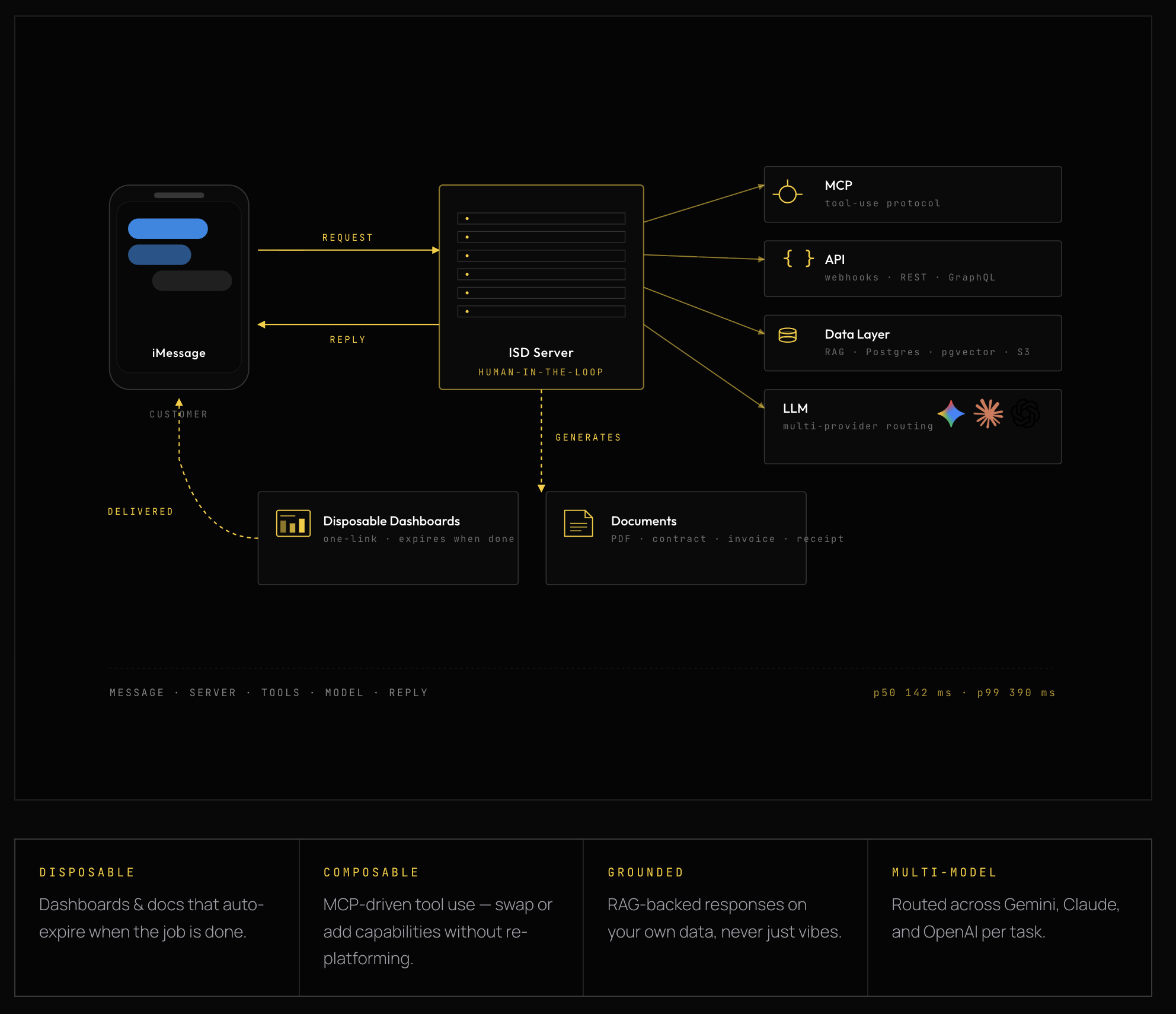
Stop buying disconnected tools. Start building one operating system.
Most small businesses do not need another portal, another login, or another dashboard nobody opens. They need the sales lead answered, the appointment booked, the invoice followed up, the client updated, and the owner alerted when something matters.
The Old Way
Forgotten websites. Manual inbox triage. CRM fields nobody trusts. Apps that make your team do more work just to keep the system updated.
Every missed handoff becomes another reminder, spreadsheet, text thread, or "did anyone call them back?" meeting.
The PAS Way
One engineered workflow routes across the places your team already works. Humans approve what matters. Automation handles the repeatable work.
A new lead can be captured, enriched, assigned, messaged, logged, and escalated without a person babysitting the process.
The market gives you two bad choices. We build the third.
Cheap automation breaks quietly. Traditional consulting turns into meetings, diagrams, and six-month timelines. PAS sits in the middle: real engineering, fast cycles, practical scope, and production care.
Prime Automation
Tool sprawl
Zaps, plugins, and AI prompts stacked until nobody knows what owns the workflow.
Built systems
Small, durable automations with logging, documentation, human checkpoints, and real business ownership.
Heavy projects
Discovery decks, long queues, custom software nobody wants to maintain, and invoices that surprise you.
Three commitments that keep automation useful.
Automation only helps when it is trusted. That means clear ownership, disciplined rollout, and a real person accountable for what ships.
Useful in days. Designed to survive months.
We aim for a working first slice quickly, then harden the path with validation, alerts, edge-case handling, and documentation.
- Start with the highest-friction workflow
- Keep humans in approval points
- Measure the handoff, not the hype
An engineer on the release. A business owner in the loop.
AI can draft, classify, summarize, and route. PAS decides where it belongs, where it needs guardrails, and where a human must approve.
- Logging and rollback where appropriate
- Private data handled deliberately
- Exceptions escalated instead of hidden
Automation that reduces messages instead of creating them.
Good systems do not make your team stare at another screen. They move routine work forward and interrupt people only when judgment is needed.
Every workflow has a clear owner, trigger, and next action.
Your team gets fewer "just checking" reminders and more resolved handoffs.
Leads, responses, follow-ups, and exceptions become visible.
From first assessment to managed system. Five practical steps.
The goal is not to invent a giant platform. The goal is to identify the repeatable conversation hiding inside your business and automate it responsibly.
Assessment
We map where work gets dropped: lead response, scheduling, client updates, reporting, internal routing, or operational alerts.
First useful build
We ship a narrow workflow that does real work, then watch how it behaves with real users and real data.
Care and iteration
We monitor, adjust, document, and expand the system as the business learns what it actually needs next.
System architecture
We define triggers, destinations, approvals, failure modes, data boundaries, and the human escalation path.
Quiet rollout
The system lands inside the tools already in use: CRM, email, site forms, calendar, Slack, SMS, dashboards, or tickets.
Choose the level of help. Practical PAS delivery.
These are PAS-style starting points for conversation. Final scope depends on integrations, risk, urgency, and how much ongoing care you want after launch.
Entry
+ $1,000 setup · Async support, routine fixes and updates. ~1 hr/mo Erik time.
- 30 requests/mo
- Local hosting
- Async support
- Routine fixes and updates
Standard
+ $1,000 setup · Cloud hosting, monthly planning call. ~3 hrs/mo Erik time.
- 60 requests/mo
- Cloud hosting
- Reasonable cloud infrastructure included (~$50–60/mo)
- Monthly planning call
Concierge
+ $1,000 setup · Monitoring, self-healing, SLA, priority queue. ~15 hrs/mo Erik time.
- Unlimited fair-use requests
- Cloud hosting
- Reasonable cloud infrastructure included (up to ~$250/mo)
- Monitoring, self-healing, and SLA
- Priority queue
What doing this yourself usually costs.
The hidden price is not just software. It is the owner manually connecting tools, fixing brittle automations, chasing vendors, and training the team around yet another workflow.
Quiet answers.
Ready to build the quiet system?
Start with a free automation assessment. Tell us where work gets lost, repeated, delayed, or manually chased. We will map the first practical system to build.